

Sedation Dentistry Near You
To most people, sedation dentistry is primarily used to help those who suffer from dental anxiety feel more at ease during their appointment. But did you know that isn’t the only reason why your dentist may recommend it?
Below, we discuss the various forms of sedation dentistry near you, and the reasons why, other than apprehension or fear, it’s introduced into a patient’s treatment journey. If you’re interested in gathering more information about this, feel free to contact our local dental clinic.
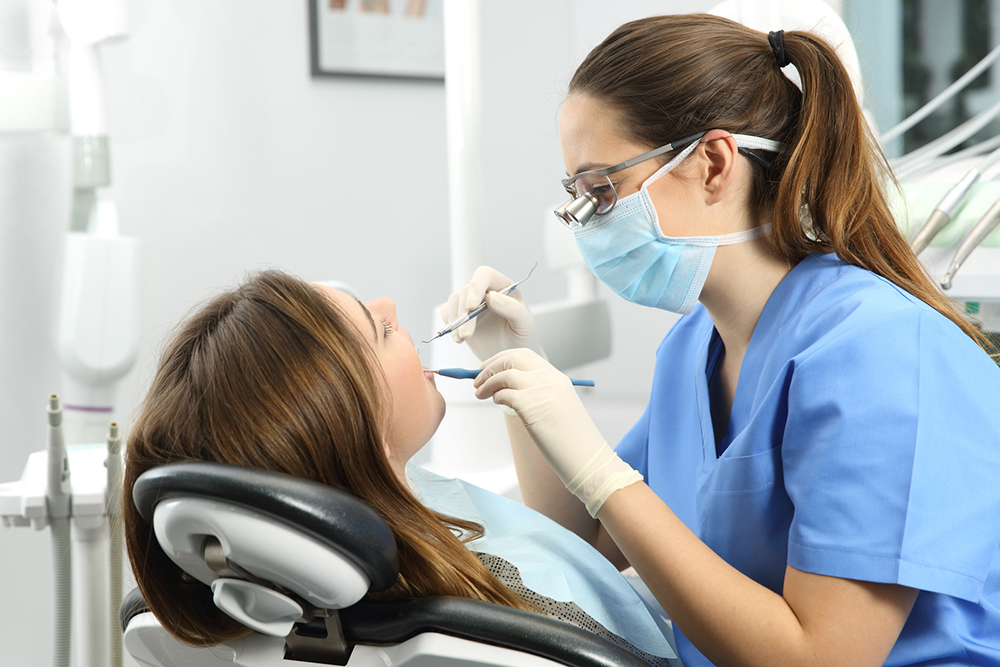
Forms of Dental Sedation
Sedation dentistry is sometimes referred to as sleep dentistry because it can help patients feel as though they are “asleep” while a dentist near you provides treatment. In reality, you’re not actually sleeping; usually, you feel extremely woozy and relaxed. Your body does not register pain, which allows patients to thoroughly relax.
Described below are the primary types of dental sedation available to you:
Minimal – Minimal sedation is otherwise known as local anesthesia. It is administered through a needle and numbs the area in your mouth that your dentist will be treating. Minimal sedation is provided during appointments for dental fillings, crowns, and, in some cases, routine cleanings.
Moderate – Unlike minimal sedation which keeps you wide awake, moderate causes you to feel rather woozy. If you talk, your speech will most likely be slurred. There is also the chance that you’ll fall asleep and won’t recall most of your visit.
Deep – You will teeter on the verge of consciousness upon receiving deep sedation. You’ll probably fall asleep. But, if necessary, you can be woken without difficulty.
General anesthesia – You are rendered fully unconscious. Though this is mainly used in a hospital setting, it can be found in a dental clinic too. However, to administer general anesthesia, dentists need to receive additional training. Sometimes, an anesthesiologist will be brought in to assist.
Alongside an injection, the sedation medication can be given to you in the form of a pill, using an IV, or you can inhale it through a mask. Talk to your dentist to learn more; they’ll help you identify which form of sedation dentistry near you and sedation administration is the most appropriate for you and will help you feel as comfortable as possible.
No matter which type of sedation you select, you can rest easy knowing that each one is safe for patients of all ages.
Why Would I Need Sedation Dentistry?
Mentioned earlier, dental sedation isn’t exclusive to those who deal with anxiety or fear. Additional reasons why a patient may wish to consider this particular treatment include:
- Having a low pain tolerance.
- They have trouble sitting still in the dentist’s chair. This often applies to children.
- The patient has special needs.
- An overactive gag reflex.
- Suffering from extreme tooth sensitivity.
Receiving a complex or extensive amount of dental care.
At Cornerstone Dental Centre, We’re Here for You!
Are you curious about sedation dentistry in Langley? If so, we recommend that you speak with a member of our amazing dental team. They will be able to aid you on your unique oral health journey and ensure that you remain at ease the whole time.
To set up a visit, give us a call, send an email, or drop by our location when you can.
Frequently Asked Questions
Sedation dentistry refers to the process of administering a drug to a dental patient to relax them. It is most usually applied to nervous patients and lengthy or complicated surgery of the teeth.
Dentists normally employ four types of sedation techniques that include oral, nitrous oxide (or laughing gas), intravenous (IV) and general anesthesia (deep sleep).
It is possible that yes, sedation dentistry may be applied to both children and adults, with the condition of the patient in terms of health background and appropriate examination under the guidance of a licensed dentist.
You will not experience much pain or hardly any pain at all when you are under the influence of sedation. Local anesthesia is normally applied in association with sedation.
You will be given certain instructions by numerous offices. As a rule, you will have to fast (no food), choose a means of transportation, and inform the dentist about your medical history and the intake of drugs.
You will either remember or forget the dental treatment depending on the various types of sedation applied. Other forms of sedation result in minimal or no recollection of the event or operation.